Showing posts with label Book Group. Show all posts

Friday, 6 June 2014

"The Hiding Place" (1971) by Corrie Ten Boom

On Thursday 5th June 2014, the hardest working Book Group in Hove reconvened for another evening of literary cut and thrust, and insightful cultural comment, and the discussion took place at a new venue: The Hove Deep Sea Anglers Club in West Hove's fashionable angling district.

Robin, full of the joys of Dutch cycle paths, and Van Gogh, wanted to share his love of the Netherlands with his HBG compadres and, frankly, who could blame him.  His eyes flashing with the gleam of the zealot, he introduced his book choice as "charming" and "understated" for Robin had selected "The Hiding Place" by a Dutch woman called Corrie ten Boom (1892-1983).   

Corrie ten Boom and her family were Christians who were active in social work in their home town of Haarlem, the Netherlands. During the Nazi occupation, they chose to express their faith through peaceful resistance to the Nazis by helping the Dutch underground. They hid, fed and transported Jews and underground members hunted by the Gestapo out of Holland. They were able to save the lives of around 800 Jews, in addition to protecting underground workers.  On 28 February 1944, they were betrayed and Corrie and several relatives were arrested. The ten Boom family members were separated and transferred to concentration camps. Corrie was allowed to stay with her sister, Betsy. Corrie's father, sister and one grandchild died. Corrie was released in December 1944.

Robin
Robin highlighted the themes of reconciliation and forgiveness that also characterised another recent choice "The Railway Man".  The book prompted Robin to take stock of his life and re-evaluate many of his assumptions, including the significance of ants.  6.5/10

Nick, who could not attend, emailed through his thoughts... he confessed to breaching the 8th Rule of Book Group: never read a book cover before reading the book. After reading the cover, Nick concluded Corrie's book was not for him.  Nick was to quickly realise his face was covered in egg as he "couldn’t have been more wrong" about Corrie, and her book: An inspirational read, full of vivid characters.  Every situation has things you can learn from - a message believers and non-believers can all appreciate.  Nick was also struck by the similarities with The Railway Man - the difficulty of forgiveness, the importance of redemption, the need to share traumatic experiences.  7/10

Don: a peaceful warrior
Don explained how he is steeped in books about the Nazis and the holocaust.  Don described Corrie as a peaceful warrior, resisting inhuman evil without violence and responding to personal persecution and injustice with grace, love and forgiveness.  "Worrying does not empty tomorrow of its troubles, it empties today of its strength", murmured Don before lavishing the book with 8/10.

Nigel agreed that this was an incredible story of selflessness, sacrifice and bravery, and an always timely reminder about the evils of fanaticism and intolerance.  He observed how Corrie ten Boom believed she was an instrument of God and all that happened to her was part of His purpose, which Nigel felt raised many broader questions that the book did not address.  The book is clearly pitched at a Christian audience with little regard to style or structure; very clunky, and painful to read in places. Was this the translation?  Or just the fact that the writers were not really concerned about how the tale was told?  Nigel explained that he has no faith and finds some aspects of Christianity off putting. Corrie's inspirational bravery was insufficient to redeem the book's more negative aspects.  4/10

Tristan was able to rise above the "plodding and pedestrian prose" to celebrate Corrie's selflessness and bravery.  Despite ten months of cruelty whilst interned, Corrie always prayed for the hearts of her captors. In contrast to Eric Lomax, author of "The Railway Man", Corrie was constantly forgiving her captors and those who persecuted her, and in this way was able to accept her experiences almost as they were happening.  Tristan observed how this was in stark contrast to Lomax who was only able to reach a similar outcome after finally seeking counselling having endured years of suppressing his feelings about his wartime experiences.  "Is prayer your steering wheel or your spare tyre?" asked Tristan.  6/10

Keith was also unable to attend in person however, through the medium of email, told us he felt it "a book of two halves": life in Haarlem before and during WW2, and the horrors of imprisonment and Ravensbruck.  The first half held more interest, whilst the second, like "The Railway Man", was an account of terrors barely possible to imagine. The book is a Christian testimony, and that perspective contains both Corrie’s and her sister Betsie’s outlook.  This aspect of the book did not work for Keith (including the workbook where Keith was asked to examine the fact that ‘God governs all things, even those that appear to us senseless and cruel’). From a purely literary perspective Keith gave it a 7/10.

"The Hiding Place" (1971) by Corrie Ten Boom stimulated an interesting and wide-ranging discussion about faith and bravery.

Robin enthused about his film choice, "Lust For Life" (1956) directed by Vincente Minnelli.

Robin really enjoyed this biographical film about the life of the Dutch painter Vincent van Gogh.  The portrayal of Van Gogh by Kirk Douglas ticked all Robin's boxes as did the the madness of creative passion and the heartbreaking tragedy of Vincent's starving, misunderstood genius.  8/10

Tistan felt the film had not aged well describing it as "mildly interesting" and "unconvincing".  4/10

Nigel felt it was competent but very dated and was curiously uninspiring and dull.  The direction and cinematography were pedestrian and this is where  Vincente Minnelli probably missed a trick - for all Kirk Douglas's efforts at bringing the tortured artist to life he needed some cinematic tricks to help create a more compelling film. Anthony Quinn's Gaugin is the best thing about it.  4/10

Keith appreciated the canvas stills which were woven in to the film's fabric and
Keith - reminded of Russ Abbott
the early section about Vincent's life in the Belgian mining town.  Keith was not entirely con-Vince’d by Mr Douglas. With his red hair, Keith got flashes of Russ Abbott. Everyone should know a bit about Vincent, and the film gives an easy-access view of his challenge to the art establishment. So why not give it a view? 7/10

Robin then apologised at length for his appalling musical selection.  Nobody had anything even slightly positive to say about "Van Halen" (1978):  

Don described it as the musical equivalent of the M25.
Tristan called it a base parody of music.    
Robin, in between apologies, called it an abomination.
Keith wanted it consigned to the cultural landfill. 
Nigel was reminded of a pumped up bodybuilder on steroids and had one question "Why?"  

Out of curiosity, Nigel had established NME's top tracks of 1978, as a way of trying to establish what he was listening to whilst in an alternate universe people were buying Van Halen's album in their droves...

Buzzcocks - Ever Fallen In Love
Public Image Ltd. - Public Image
Ian Dury - What A Waste
Rolling Stones - Miss You
Elvis Costello - (I Don't Want To) Go To Chelsea
Siouxsie And The Banshees - Hong Kong Garden
The Clash - White Man In Hammersmith Palais
Magazine - Shot By Both Sides
Bryan Ferry - Sign Of The Times
Evelyn "Champagne" King - Shame
Ian Dury - Hit Me With Your Rhythm Stick

...why would anyone listen to Van Halen with that level of brilliance and diversity going on elsewhere?

With the question left hanging in the air, the HBG bade each other, and their new angling chums, a fond farewell before leaving the luxury of the HDSA club for the world beyond.

Monday, 22 July 2013

"The Death Of Bunny Munro" by Nick Cave

Keith introduces his Nick Cave fest
On Thursday 18th July 2013, the Hove Book Group took a trip over to the dark side.  Yes, Keith sparked up yet another cigarette before announcing why he had decided to curate a festival of Nick Cave.

It all started with one sweet little taste of the music.  Surely one song won't hurt?  Alas, within a few beats Keith was hooked, and by God he was now hellbent on converting the entire Hove Book Group too.

Don, who has a nose for danger, avoided the whole farrago, claiming he was unavoidably detained in Gloucester, with a Dr Foster.  

Mr Pusherman started by suggesting we read "The Death of Bunny Munro".  It's got a sweet little bunny on the front cover so it must be a lovely little tale we could read to our children.  That's what we were promised.  By the time we were a few pages in it was too late.  Far too late.

Keith let out a cackle as he gazed upon his work.  "So what did you think then?  Did you like my little story?  Did you like my friend Bunny?  Sweet little bunny wunny.  Would you like to have spent more time with him?"


A sweet little bunny
Why Keith?  Why?  

Because it's a classic.  A take it to the max - the Mad Max - extreme.  What about the language?  Oh the language.  What would Caitlin Moran say Keith?  How could you Keith?

Because it's got humour.  Because it's so well written.  Because I have an old sock under my car seat.  Because I hide my hard on with my copy of the Daily Mail.  Because I like it.  Because I say so.  Because you let me choose. Because, because, because.  And because I gave it 7/10.

Hamish actually let his wife read it.  Hamish's wife really liked it.  Hamish found these two "facts" as disturbing as anything in the book.  Hamish, looking ashen faced, said that he "didn't really enjoy it".  5/10.

Robin, with the shiny-eyed messianic stare of the newly converted, shouted "Genius!"  Yes, you heard right.  "Genius!"  Shagging a junkie corpse is not so bad.  We've all done it.  It all makes perfect sense.  Who needs a moral compass?  Who needs a compass?  Follow your groin.  9/10 from this cocksman.


Nick "lost his mojo"
Nick was not so convinced, bandying words and phrases like "lost his mojo", "iniquitous", "gone off the boil", "tedious", "waste of space", "perfidious", "gone to the dogs".  Where's the humanity?  I trusted you Nick.  You. Betrayed. Me. 2/10

Nigel wanted to like it.  He really did.  He's a fan you see. He saw Nick and Will Self at a launch event for the book.  The father-son relationship echoes "The Road".  Or does it?  Bunny barely registers his son's needs and feelings, and registers only the vaguest sense of love or responsibility. Bunny Munro is a monstrous character: vain, sex obsessed, egotistical, and deluded. Having created this monster, Nick Cave seems unsure what to do with him and the novel is essentially a sequence of meaningless attempted sexual encounters. There is no character development. Bunny's limited self-insight gives the character nowhere to go and his devoted son can barely work out what is going on. It all feels like a short story expanded into an overlong novel. Even the black humour generally falls wide of the mark. 4/10. 


Tristan was all about the splayed buttocks.  Vile filth, depravity, raw power, Butlins.  Yes Butlins.  Our True Intent is all for Your Delight.  Unlike "Hangover Square" the descent into alcoholism and self destruction was unrealistic.  The damage was shelf inflicted.  Where were the thundering old testament prophets?  The whiskey priests?  The horned killer?  OK, we'll give you the horned killer.  6/10


The Proposition
Keith saw all that he had made, and it was very good.  Wiping the splattered blood from his brow, he offered us The Proposition.  Was it historically accurate?  Does it matter?  It. Is. Believable. 7/10

Robin likes depravity, violence, and spaghetti.  7/10

Tristan praised the costumes, and the cinematography, and the slight flaws. 7/10

Nick was reminded of Mad Max.  Epic. 7/10

Hamish likes Australia, more than the USA. 7/10

Nigel says yes to Guy, Ray, Danny, John, David and Emily - and Nick and John H.  7/10

And, so finally, we were ready to face the music.  Live Seeds.  Fresh from a Nick Cave and the Bad Seeds performance at Glastonbury, Keith was full of praise for Nick Cave who is his new favourite artist in the world ever.  I love it.  I LOVE IT. 9/10.


Robin didn't listen to it.  He was too busy listening to Mumford and Sons.  Perhaps.  Or just
Robin of Wildlife SOS takes another emergency call
too busy.  T
oo busy responding to Wildlife SOS calls.  


Nick loves The Mercy Seat.  It's his favourite song ever written.  Really.  He can't get enough of it.  He likes it more than Billie Jean, and Thriller. 7/10

Hamish, whilst stroking his chin, declared it was "an interesting album".  A departure from The Birthday Party. 8/10

Nigel likes it very much.  7/10

And so, with the rueful grins that frequently characterise trauma victims, and some chat about cartoon cats, the Hove Book Group broke up for the Summer.  Yes, it's the last gathering until September 2013.  In the meantime the band of brother's have Nigel's Summer-themed choices to sustain them through the long hot Summer.  

Remember the sun cream and wide brimmed stetsons.   Adios Amigos.


Wednesday, 20 March 2013

Caitlin Moran "How To Be A Woman"

Caitlin Moran on hearing Don's comments
On Tuesday 19th March 2013 Hove Book Group met up for another evening of top flight cultural discourse.  Here is an eye witness account of what went down.

Nick implored the group to explore their female sides with three selections that took us down Equality Avenue.  We came to the event having all read Caitlin Moran's best selling book "How To Be A Woman".  Nick felt the book was mis-sold and was more about Caitlin than a generic book about women.  Nick likes to think of himself as someone sympathetic to feminism, as long as it doesn't involve too much shouting at men that is. Despite this modern and enlightened approach Nick felt the book did not offer much more than some great one-liners and sporadic wisdom - specifically the sections on abortion and child birth.  A good read.  6/10

To Nigel, a renowned 50 something liberal male, Caitlin Moran is preaching to the converted.  There's very little in her book for him to disagree with.  He will encourage his daughter to read it once she is 15 or 16.  Nigel felt there were some parts of the book where Caitlin could have been far more succinct without diluting the message.  Nigel ran through the notes he had made at the end of each chapter.  Some chapters were far more successful than others.  The ones that Nigel thought were most effective included "I Start Bleeding", "I Become Furry" ,"I am Fat", "I Encounter Some Sexism", "I Am In Love", "I Get Married", "I Get Into Fashion", and "Abortion".  Nigel took issue with Caitlin's support of celebrity gossip magazines, "Buying them only encourages them and their agenda to undermine women Caitlin".  Her style is fairly strident and opinionated which might not be to everyone's taste, and some sections are a little overlong, but fundamentally it's a wise and funny book with some helpful and thoughtful insights.  7/10  


Before the meeting there had been some speculation about Don's reaction to this book.  Previous books that Don disliked having been shredded, thrown on a compost bin etc. Don confessed that this was a new genre for him and that he really liked Caitlin's column in The Times newspaper.  So far, so encouraging, alas he then stated that a lot of the content had already appeared in her newspaper columns, that she was "fine in small doses" before a parting shot that this book was "witless, turgid and unfunny".  Don stopped reading on page 161.  Ouch.  Take that Caitlin Moran.


Don said what?!
Jason's wife had read him some funny sections of the book a few months before this gathering, and so inspired Jason to read the whole thing.  Once Jason sat down and started reading "How to Be a Woman" properly he felt he'd already heard the best bits.  That said, by the time Caitlin Moran stated "in many ways, there is no crueller or more inappropriate present to give a child than oestrogen and a big pair of tits. Had anyone asked me I think I would have requested a book token or maybe a voucher for C&A instead", Jason realised he was reading a helpful book and as Caitlin states, "I'm neither 'pro-women' nor 'anti-men'. I'm just 'Thumbs up for the six billion."  "Right on", murmured Jason. 6.5/10

Robin lost his kindle on a plane and, with it, his copy of this book.  Nigel's copy arrived too late for him to finish it.  Doh!  Robin then digressed, and described how none of his girlfriends had ever engaged in masturbation.  Whilst the group digested this sensational news, Robin then questioned the extent to which Caitlin had masturbated.  Robin felt this was a book that might as well have been subtitled "common sense, with some jokes and improbably high levels of masturbation". 5/10


Caitlin hears Robin's remarks about female masturbation
Hamish felt this was not a book about feminism, rather a book about Caitlin and modern life.  His wife had found it hilarious, Hamish less so.  Was it more funny to female readers?  The jokes are integral to the book. Hamish thought her account of the birth of her first child was absolutely brilliant; and her husband's tears at her suffering is beautifully and memorably described. She can also squeeze in a gag on how the whole experience has given her perspective: "I doubt that I will get angry about Norwich Union changing its name to 'Aviva' ever again." 5/10

Keith stated that this was his kind of feminism and Caitlin was his kind of woman.  Great news.  Persuasive, honest, passionate, inclusive.  Keith was impressed by Caitlin and her book. The book's achievement is to make feminism seem unthreatening and simple. Caitlin is not anti-men and believes that we're all just "The Guys", that sexism is just a form of bad manners, and that one thing that would help is more imaginative porn.  Keith says a hearty "Yes" to all of the above.  9/10


Tristan heartily enjoyed it.  A funny, liberal book.  Tristan then distributed an eye opening photo of Germaine Greer to illustrate a point about female-centric pornography.  Tristan stated that it is really important that we talk about this stuff and understand it.  That Caitlin Moran's book is also engaging, brave, clever, and funny is a bonus.  Everybody should read it.  8.5/10 

An interesting debate with a variety of views - with most participants from Hove's number one book group feeling that this was a well written book with humour, insight and power.  Thank you Caitlin Moran.


The Pixies' legendary female bassist informed Nick's musical choice "Doolittle" by The Pixies....


Sadly at this point the notes became a series of illegible scrawls and crude and childish drawings.

The Allmusic review concludes with "A fun, freaky alternative to most other late-'80s college rock, it's easy to see why the album made the Pixies into underground rock stars."  Broadly speaking: 


Nick and Nigel are fans and very positive about the band and this album.


Jason and Robin don't like it.


Keith, Hamish and Tristan were only partly convinced by it.


Thelma and Louise
Finally the group discussed the film "Thelma and Louise".

Despite some dreadful music, Nick really enjoyed this film.


Nigel loved it when it first came out, however felt it had dated badly and was struck by the almost universal overacting.  Still watchable but not as good as it seemed all those years ago.


Once again, at this point the meeting notes degenerate into stream of consciousness mumbo jumbo and arcane symbols that not even the experts at the British Museum could interpret.  


The end.


Friday, 23 November 2012

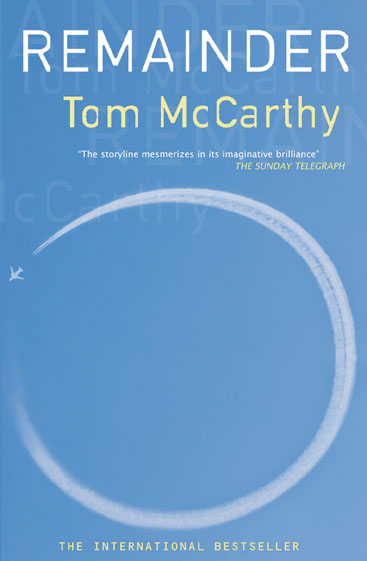
"Remainder" by Tom McCarthy


The Hove Book Group gathered together on Thursday 22nd November 2012 to discuss Keith's choices.

First up was "Remainder" by Tom McCarthy.

"Why Keith?  Why?"

Keith replied that he wanted something modern, new and unknown, and that's what he got from this book.  Original, intriguing, intense, and humorous.

Tom McCarthy couldn’t get Remainder published in the UK at first. He eventually sold it to a French house who marketed it through art galleries rather than bookstores. It proved a critical hit and so was then picked up for a more traditional UK release.

Keith thought it was "an excellent book" and lavished it with an excellent 9/10.

As Keith is a fan of alternative scoring systems, Hamish emailed through a different approach for his review.  Using Kurt Vonnegut's eight rules for story writing he had this to say:

Hamish: alternative scoring system 

Use the time of a total stranger in such a way that he or she will not feel the time was wasted: Was Hamish's time wasted?  The novel was certainly readable enough, dramatic action took place, the story progressed and Hamish kept turning pages.  It wasn’t hard work.  Sadly Hamish felt little emotional attachment to the novel though. Half a Vonnegut

Give the reader at least one character he or she can root for: The narrator totally dominated the book.  None of the other characters were developed enough.  The narrator suffered some mental illness or was just self obsessed and didn’t care.  Either way, Hamish found him vaguely irritating and difficult to relate to.  No Vonneguts 

Every character should want something, even if it is only a glass of water:  The narrator wanted to be real.  Naz initially wanted money but, as the book went on, wanted to feed his addiction to making things run like clockwork.  The other characters presumably just wanted money.  So they did all want something.  But Hamish gave no points because both the narrator and Naz’s desires seemed contrived and plain daft.  No Vonneguts

Every sentence must do one of two things—reveal character or advance the action: Hamish felt that no sentences revealed character.  The action was regularly and dramatically advanced however, although to what end?  Half a Vonnegut

Start as close to the end as possible: The narrator started with the accident and ended with the last re-enactment.  We learned nothing superfluous about his earlier life.  There were no offshoots from the plot, cameo appearances or flowery Rushdiesque descriptions of nearby vegetation.  It was succinct and to the point.  Whatever the point might have been.  One Vonnegut

A sadist
Be a Sadist. No matter how sweet and innocent your leading characters, make awful things happen to them—in order that the reader may see what they are made of:  Sadly nothing awful happened to the narrator.  No Vonneguts

Write to please just one person. If you open a window and make love to the world, so to speak, your story will get pneumonia: Mr McCarthy cannot possibly have written this hoping to make love to the world surely?  The self obsession suggests he wrote it just for himself.  Which is of course how it should be and Hamish scored it  One Vonnegut

Give your readers as much information as possible as soon as possible. To hell with suspense. Readers should have such complete understanding of what is going on, where and why, that they could finish the story themselves, should cockroaches eat the last few pages: The opening page telling us of some awful accident, but the book then actively refuses to give further details.  Early hopes were that things would be explained, it became increasingly evident that they would not.  The narrator/McCarthy actually took some pleasure in not explaining things.  Tom McCarthy utterly failed to make his story similarly believable.  No Vonneguts

So overall, Hamish awarded a grand total of 3 Vonneguts out of a potential 8.  In summary, "a fairly readable pile of complete old tosh".  Tristan converted the "Vonneguts" into the traditional HBG scoring system to reveal a dismissive 4/10.


Nick - used to live in Brixton
Nick, as an ex-Brixton resident, enjoyed the book's Brixton setting.  It was a way in for him.  Alas, after getting in the book never took off.  Too many reconstructions and re-enactments.  Remainder is a novel of ideas. It was clear to Nick that to have any chance of understanding what this book might be about he'd have to pay attention more to the themes than to the events: repetition; the barrier of consciousness from direct experience; the intransigency of matter.  Alas, this approach merely resulted in Nick concluding that this book was Iain Banks-lite.  5/10

Don, quickly got into the book, so much so that he was buoyed.  It was a page turner.  Akin to Blindness.  Don loved the cats...part of the re-enactment of the building and old apartment includes the view from it of a sloping tiled roof on which cats would lie in the sun. This part doesn’t work out so well as the cats placed on the roof keep falling off it and dying. The cats were not enough for Don though.  He demands more than dead cats from his reading, and - as he read on - the book's lack of characters started to annoy, and - at the conclusion of the book - he felt it was only worthy of 6/10.


A cat
Nigel, whilst a fan of Kurt Vonnegut, was not convinced by all of his rules (See Hamish's review above).  Nigel enjoyed the way the book allowed the reader to fill in the blanks.  Nigel was not really sure what it was all about, however he found it beguiling and it sparked off many thoughts and ideas around memory, feelings, experience, time, and life.  

As the book's mysterious councillor reminds the reader towards the book's conclusion: "No less than one hundred and twenty actors have been used. Five hundred and eleven props — tyres, signs, tins, tools, all in working condition — have been assembled and deployed. And that’s just for the tyre shop scene. The number of people who have been employed in some capacity or other over the course of all five re-enactments is closer to one thousand.” He paused again and let the figure sink in, then continued: "All these actions, into which so much energy has been invested, so many man-hours, so much money — all, taken as a whole, confront us with the question: for what purpose?"  For what purpose indeed?  8/10


Tristan

Tristan found the book irritating.  Was it meant to be irritating?  Where was the cleverness?  Tristan felt that the only cleverness was in the madness of the narrator.  Where was the humour?  To what extent is the narrator trustworthy? Is he awake? Was the book a dream? At one dizzying juncture the narrator admits that a conversation he just described didn’t actually happen. Later the narrator is dogged by a smell of cordite. Nobody else can smell it except for one man.  We can’t trust the narrator.  Who can we trust?  4/10

Robin explained he didn't like the book.  Robin recently went to an exhibition in London. By chance he got talking to one of the curators of the exhibition - a sculptor. Robin mentioned that he was reading Remainder. Was sculpture a theme?  The cutting away of stuff until what remains is revealed? Michelangelo spoke of the statue being inside the block of marble already. Cut away the excess material and the statue will be revealed. 3/10


Robin - chance encounter with a sculptor
So, in summary, a book that inspired a mixed set of reactions, and a great discussion.  The average score from Hove's finest - 6/10.

* * * * * * * * * * * * * * * * *


Keith & Nick
With his second choice, Keith wanted to push his own boundaries, and having obsessively perused numerous obituaries he was inspired to find out more about Chris Marker (RIP), and specifically La Jetée (The Pier, 1962).  It's a c30-minute post-third world war story, made up entirely of stills, except for one brief moving shot of a woman opening her eyes. This futuristic photo-novel film was semi-remade by Terry Gilliam as 12 Monkeys in 1995.

Keith felt that La Jetée abstracts cinema almost to its essence in bringing to life the story of a post-apocalyptic man obsessed with an image from his past.  "A little wonder" with fantastic style and excellent images.  Those images endured for Keith.  8/10

Hamish thought that for a short slideshow of photos backed by sounds and narration, this was highly effective.  It reminded him of Godspeed You Black Emperor for some reason.  Hamish enjoyed it.  Five Godspeeds out of a possible seven.  Tristan converted this into a score of 7/10.


Good news for Don
Nick watched the film in French, despite not speaking the language.  When questioned, he was a bit vague on the plot.  He still loved it though.  8/10

Don watched a different film by Chris Marker - San Soleil.  The good news for Don was that the film featured some cats.  Cats and owls were Marker's favourite animals and were a central theme of Sans Soleil.  Don explained that San Soleil also focuses on the weird and the titillating (taxidermied animals in sex poses, an animatronic JFK in a shopping mall).  Marker explains what he sees with the curiosity and empathy of an anthropologist.  San Soleil also has an uneasy relationship with truth.  Don explained that it undermines itself at every opportunity. What is stock footage and what is original? Are scenes separated by geography also separated by years?  Don was unsure.
7/10.
Robin - shocked

Nigel explained the reasons for his high tolerance for art cinema.  These included a woman called Lemmy, carrot cake, coffee in polystyrene cups, and The Electric Cinema in Notting Hill Gate.  Nigel liked the photography and the film's dream-like quality.  7/10

Tristan marvelled at how the still images traced one man's attempt to reclaim an image from his past, and in particular, the poetic, provocative meld of global catastrophe and human frailty.  Why isn't there more of this stuff?  8/10

Robin was also enthused, so much so that he watched both the French version and the English version.  Robin was shocked by the moment the woman blinked - the only moving image in the film. 7/10.


Friday, 7 September 2012

"Planet of the Apes" by Pierre Boulle

Hove Book Group came together, once again, on the evening of Thursday 6th September 2012 at The Poets Corner pub.


We discussed Robin's choices.  The first book under discussion was "Sum" by David Eagleman.

Robin had heard about the book whilst enjoying an arts programme on his radiogram.  He was attracted to it because it was short and interesting.  Like so many of the best things in life.  Robin was keen to understand which of the group were believers in the afterlife (sadly none of us).   Robin felt that, in terms of the afterlife, most of the world’s major religions have fairly prosaic stuff on offer. Only occasionally will a cosmology be really colourful, as it is in Greek mythology, where some interesting eschatological options are available. In terms of this book Robin felt that after a while the stories - whilst enjoyable and provocative - started to merge into one. 7.5/10


Nigel explained that it was the second time he'd read this book.  The first time was just after it was published.  The short stories that comprise the book are clever, occasionally funny, and generally thought provoking.  Those stories that offer life lessons, and ideas about enjoying a fulfilling life, were the ones he enjoyed the most.  Nigel confessed that towards the end of the book the cleverness started to pall, and the stories started to merge together.  Ultimately it's enjoyable and interesting but not quite as wonderful as many of the reviews suggest.  7/10

Don... didn't read it.

Keith was impressed by how the book attempted to do something different with complex issues.  "We are our interactions with other people" resonated.  Speculating about who, if anyone, created us and what lies ahead of us can be intellectually engaging and entertaining too.    Another example that delighted Keith: “There are three deaths,” Eagleman writes. “The first is when the body ceases to function. The second is when the body is consigned to the grave. The third is that moment, sometime in the future, when your name is spoken for the last time.” In this scheme, when we die, we go to a cosmic waiting room where we mark time until our name is never again mentioned. The famous are trapped here, of course, for a very long time; they wish for obscurity, but it may take an eternity to arrive. 7/10

Tristan was also coming to the book for a second time.  Quirky and original, was his pithy summary.  Although Tristan did not actually say this, Sum invites comparison with two great books, which offer visions of the limitations and unbounded possibilities of imagination: Michael Frayn’s satire Sweet Dreams, a bourgeois liberal vision of heaven, and Italo Calvino’s fantastical gazetteer, Invisible Cities. 7/10

Nick enjoyed reading a book on the afterlife that was neither by a Dawkinsesque staunch atheist, or a person with strong religious convictions.  "How does anyone believe in only one story?" queried Nick.  By combining scientific knowledge with creativity and an inventive imagination, Eagleman has written a book worthy of a massive 9/10.

A very respectable average rating of 7.5/10

After a pause for some refreshments, we pressed on with Robin's second choice: "Planet of the Apes" by Pierre Boulle...

Unexpectedly Robin confessed that he was expecting the book to be "complete trash".  His main motivation for selecting the book had been his passion for saving animals around the world.  Most days Robin is involved in cutting free and caring for dancing bears in India; rescuing primates from animal traffickers in Indonesia; and treating stray dogs and cats in developing countries.  

Planet of the Apes begins with Jinn and Phyllis sailing across space in their small craft on holiday and eventually coming across a bottle drifting in the void -- a bottle that they get on board, only to discover a manuscript in it. It is the manuscript, an account by the journalist Ulysse Mérou, that makes up the bulk of the novel, though the book closes with Jinn and Phyllis again, after they have finished reading it.  Whilst flawed, Planet of the Apes is nevertheless an entertaining read. Boulle simplifies a few too many ideas in the book, but the action is good and the book entertains.  Robin "loved it".  8/10

Nigel
Nigel had high hopes having read some excellent science fiction from the 1960s - and having concluded it was something of a golden age for the genre.  Nigel also had fond, albeit hazy, memories of the Planet Of The Apes television series, and the original films, which he'd enjoyed as a child.

The first couple of chapters were very promising however by the end of the book Nigel had concluded this was, at best, a short story that had been stretched to a 200 page novel.  The basic idea is a good one, and the book highlights issues like slavery, animal experimentation, racism and closed-mindedness, but Pierre Boule labours these themes and the story.  After finishing the book Nigel discovered that Pierre Boulle was a Prisoner of War during World War 2, being held captive by the Japanese.  He wrote 'The Bridge on the River Kwai' based on his experiences.  Nigel wondered about the extent to which his wartime experiences might have informed Planet of the Apes. 6/10

Don
Don also recalled the popular seventies films starring Charlton Heston and Roddy McDowell.  Don's edition included a pair of 3D glasses and this ensured his rating was automatically increased by one extra point.  Don decreed that it was a quick, fun read, with some poignant scenes where the intelligent human witnesses his fellow humans  subjected to degrading biological and mental experiments.  Don forgave the book its saggy middle and concluded by lavishing the Monkey Planet with 7/10.


Tristan
Tristan described the book as "cheesy shit" before condemning the tale to a sub-Asimov genre.  This book does not bear comparison with the titans of the 1960s - take a bow Michael Moorcock, Kurt Vonnegut and even (and whilst not to Tristan's taste) Philip K Dick.  To Tristan this book felt Victorian.  As a science fiction fan Tristan was disappointed, however - he was willing to concede - the book placed humankind under a lens and raised a few interesting issues.  Tristan then lambasted the idea that this monkey business was floating around in space in a bottle.  When did the narrator write out his account of the journey? Did he fly back into space to launch his bottle?  Tristan neither knew nor indeed cared.   5/10 (just).

Keith
Keith's opening gambit was that this book was "a neat little choice" going on to describe  it as "a decent yarn".  Keith felt the scientific detail was flimsy, often implausible and frequently illogical.  When someone suggested that the story was an allegory, Keith retorted that "it might be allegory but it was shit allegory".  That's you told Pierre Boulle. 5/10

Nick... didn't read it.

An average rating of 6.2/10

And so concluded another enjoyable gathering of Hove's premier book group.  Next time out we will be discussing "Adventures of Huckleberry Finn" by Mark Twain.

Friday, 4 May 2012

"Snowdrops" by AD Miller

Hamish decided to chose a crime book and so visited The Kemp Town Bookshop where his eyes were drawn to "Snowdrops" by AD Miller.  "Ah ha", he thought "This will continue last month's Russian theme as well as meeting my idea for a crime novel".  And so it was that we all read "Snowdrops".

Hamish stated this was not exactly what he was expecting as it was a different kind of crime book.  Hamish described it as elegantly written, clever, interesting and he enjoyed it.  He awarded it with 7/10.


Nigel described the book as "a minor masterpiece".  Despite not having any first hand knowledge of Russia, Nigel felt it evoked powerfully the "Wild East" of post-Glasnost Russia - and this is one of the book's great strengths.  The other being that the story is a compelling, well written page turner.

The book is written as if Nicholas, the English expat lawyer protagonist, is writing a confession to his fiancé who is unaware of this particular story.  Nigel felt this device was a bit clunky and was one of the few weaknesses of the book.    

Nicholas does not start the book as a particularly moral individual (he describes his job as "smearing lipstick on a pig"), however his gradual corruption is extremely credible.  Nigel enjoyed the way the book hints at a dark crime which, as it turns out, whilst still dreadful, also appears to be - by modern Russian standards - fairly mundane.  Nigel identified a number of vivid moments: the extreme Moscow winters; the aggression and rudeness of the average citizen; the horrible nightclubs; the two con tricks - one involving an apartment, the other millions of dollars; and the visit to the dacha.  8/10


Robin described the book as a "slow burn".  Memorable if a little stereotypical.  Robin was struck by how the weather dominates Russians' lives through the course of the almost unbearably long and cold winter and the all too short hot summer.  Robin loved the descriptions of places "the ice on the (Moscow) river was buckling and cracking, great plates of it rubbing and jostling each other, as the water shrugged it off, a vast snake sloughing of its skin."  Overall Robin felt it was an impressive 'first novel' - quick, absorbing, mildly thought-provoking and moving.  7/10


Keith described an "entirely linear plot" and "the inevitable forward motion" of one man's failure to swerve any of the moral hazards he encounters while working as an expat lawyer in Russia.  The narrator is a flawed and cowardly man.  Despite this Keith wanted to read on because of the insights he got about Russian culture and society - and this coming from a man whose screen saver is a picture of him standing in Red Square.

Keith felt the book really nailed that heady sense of possibility that comes with the early stages of living abroad; the feeling that you can be who you want to be, run risks you never would normally take because you've stepped out of time for a bit.  Nick, the narrator, wanted his fiancé to forgive his depraved past and moral indifference. Keith stated that the the novel occasionally veered rather too much towards caricature and for this reason he felt he could only award it with 6/10 using his new harsh marking system (in which a ten is an impossibility).


Tristan really enjoyed the book. It was an easy read, but quite a page turner.  Tristan knows next to nothing about modern Russia (other than a rather dubious take on it from James Hawes' Rancid Aluminium), so he rather enjoyed the author's personal assessment of Russia and the Russians. Having said that, it did sometimes feel like point-scoring as he revealed yet another observation about Russian life, but on balance Tristan liked it, and especially the comparisons with the UK.

The author's bleak view of the seediness, hopelessness and corruption is no doubt exaggerated for literary effect, but Tristan was sure there must be some grains of truth in there somewhere.  Tristan enjoyed the characters, especially the embittered foreign correspondent, and the neighbour who spoke in aphorisms ("only an idiot smiles all the time", "invite a pig to dinner and it will put its feet on the table").  Tristan also liked the sense of foreboding created by his revealing in advance that things weren't going to work out well, although the whole concept of him writing to his fiancé was an annoying distraction.

In terms of the character of the protagonist, Tristan liked his strained relations with his family ("we sat looking at the children, willing them to do something adorable or eccentric"). The one thing he wasn't convinced about was his motivation: if he knew what was going on, how come there wasn't a bigger sense of fatalism? ie how could he be naive and knowing at the same time? In this sense, his motivation seemed unclear, and the ending felt a bit weak.  Overall, though, Tristan concluded it was a good, if light, read, and gave it 6.5/10.

A very respectable overall rating of 7 out of 10 for AD Miller's debut novel from Hove's Premier Book Group.

"Brother" directed by Aleksei Balabanov


To compliment Snowdrops, Hamish had also selected a film called "Brother" which was directed by Aleksei Balabanov.

Hamish observed that "Brother" is the only one of Balabanov's films to be set in a socially articulated contemporary Russia, and it effectively delineates the contradictions between the provinces and the big city, between the penurious old Russia and the new Russia of petty mafiosi and feckless youth. It shows the casual contemporary Russian racism towards Jews, Chechens and other "black-arsed" trans-Caucasians. The film's protagonist Danila symbolises the beginning of the backlash against total cultural Americanisation.

Hamish felt that the the film also gave a wonderfully resonant picture of modern St Petersburg, the most ambiguous and multifarious of Russian cities. When Danila arrives we are given brief glimpses of its classical centre, including the statue of the Bronze Horseman by the Neva, but we also get the tenement blocks of 19th-century Petersburg, inhabited by the heroes of Gogol and Dostoevsky. (Indeed the whole film can be seen as an ironic subversion of Crime and Punishment, with the killing but without the repentance.) And, cheek by jowl, we also see the Soviet Leningrad of communal flats and the new, bourgeois Petersburg of the glamorous rock elite.

Tristan found this an interesting film to watch, mostly because of its portrayal of Russia around the turn of the millennium. He liked the moral ambiguity of the protagonist, and his descent into violence. However, it did feel rather ham-fisted in a lot of places, and he found the protagonist's love of the music of Nautilus Pompilius somewhat silly. Pros: learnt a new way to eat an egg.  Cons: the bullet proof CD player stretched his credulity.

Nigel thought it was interesting to see Leningrad/St Petersburg depicted in a film set in the late 1990s.  Nigel described the film as "watchable and reasonably entertaining if barely credible".  Ultimately he felt the film was a disappointment - it was directed in a very routine manner with average cinematography.  Whilst providing a few insights into the grimness of Russia post-Communism and the bleakness of life there was very little to elevate it above average. Enjoyable tosh.

Thereafter we discussed all manner of interesting topics - the suitability of the book and film "Hunger Games" for ten year old girls; the extent to which Roy Hodgson would make a good England manager; the London Mayoral election; the film "Il divo" (2008) - the story of Italian politician Giulio Andreotti, who has served as Prime Minister of Italy seven times since the restoration of democracy in 1946; how much we miss Nick Smith; the history of the world; poker tournaments; prostate pain; Arthurian legend; Model T Fords; Sasa Papac; and just how cold it can get in Moscow.


Nigel then introduced his idea for a Patrick Hamilton themed discussion based around his book "Hangover Square", and - with that in mind - here's a couple of items to set the tone for our forthcoming Hamilton Fest...

Patrick Hamilton - introductory video


nigeyb's imagined soundtrack to the book 'Hangover Square' by Patrick Hamilton