Showing posts with label Hove Book Group. Show all posts

Saturday, 11 September 2021

The Zero (2006) by Jess Walter


Hamish started with the music and, via the band themselves, eventually settled on these terrorism themed selections.


READ:  The Zero (2006) by Jess Walter 


The Zero is a brilliant novel about 9/11


Brian Remy is a brilliant creation and his shattered consciousness is a superb storytelling device


The moments of rejoining scenes between gaps also inspire some great blackly comedic moments. Brian’s baffled questions were interpreted as humorous, wise or merely rhetorical


In the Q&A at the back of the book Jess Walter explains how he wanted Brian Remy to be an unwilling hero, and wanted him to feel how most people felt after the attacks: confused and frightened, a helpless person with good intentions.


Nothing makes sense: torturing suspects, sleeping with his girlfriend's boss, wandering a vast warehouse for processing scraps of paper, mysterious figures handing him envelopes etc. 


In less capable hands this could easily have gone awry but Jess Walter pulls if off and, in doing so, created a mesmeric, harrowing, funny, provocative, and brilliant tour de force.


There was a lot of positivity about The Zero:

Hamish praised its prescience,
Keith the memory loss,
Robin was fascinated but also frustrated,
Tristan described the style as a brilliant storytelling device, Nigel was blown away by it,
Roland acknowledged the brilliance but also found it a struggle,
and Nick listened to an audible book with awful narration so felt unable to rate it fairly. 


Nick - / Tristan 7.5 / Nigel 9 / Keith 7 / Roland 7 / Robin 7.5 / Hamish 8


LISTEN: Nocturnes (2020) by Revolutionary Army of the Infant Jesus


Opening song, I Carry The Sun, is a real charmer and not what any of us was expecting given how Hamish described them, via their record company, as nutters and that they feature on Maconie’s The Freak Zone. 


The more ambient fare was also well received although Tristan found it a little deflating.


WATCH: That Obscure Object of Desire (1977) directed by Luis Buñuel


That Obscure Object of Desire tells the story of Mathieu (Fernando Rey), the frustrated, unrequited, ageing rich Lothario, and Conchita (played alternately by Carole Bouquet and Angela Molina). Conchita’s teasing behaviour ultimately results in a beating from Mathieu and it is this that convinces Conchita that Mathieu truly loves her and is a worthy partner. This after spurned him numerous times for buying her lavish gifts including houses. 


The recurring backdrop of terrorist violence and bombings are never explored. 


All of us found quite a bit to enjoy and appreciate in this film, all except Robin who was fuming. Robin described this as the worst film we have ever watched and it made him really angry. He likened the scenes in the train compartment to a sketch on The Two Ronnies. Ouch. Take that Luis Buñuel. There’s our most memorable HBG moment of 2021 right there.


Endorse it


9/11: Inside the Presidents War Room (BBC iPlayer)

Deceit documentary (All4)

Once Upon A Time In Hollywood (2019) dir by Quentin Tarantino (Film - Netflix)

The Curiously Specific Book Podcast

Victorious Festival (Portsmouth)

Free Fire (2016) directed by Ben Wheatley (Film - Prime)

American Psycho at 30 (Radio about the Brett Easton Ellis book - BBC Sounds)

The Devil All the Time (2020) dir by Antonio Campos (Film - Netflix)

You Were Never Really Here (2017) dir by Lynne Ramsay (Film - Amazon Prime)

The Dead Don't Die (2019) dir by Jim Jarmusch (Film - Netflix)

Hamnet by Maggie O'Farrell (Book)

The Art of Self-Defense (2019) dir by Riley Stearns (Film - Netflix)

Bad Trip (2021) Dir by Kitao Sakurai (Film - Netflix)

Friday, 7 February 2020

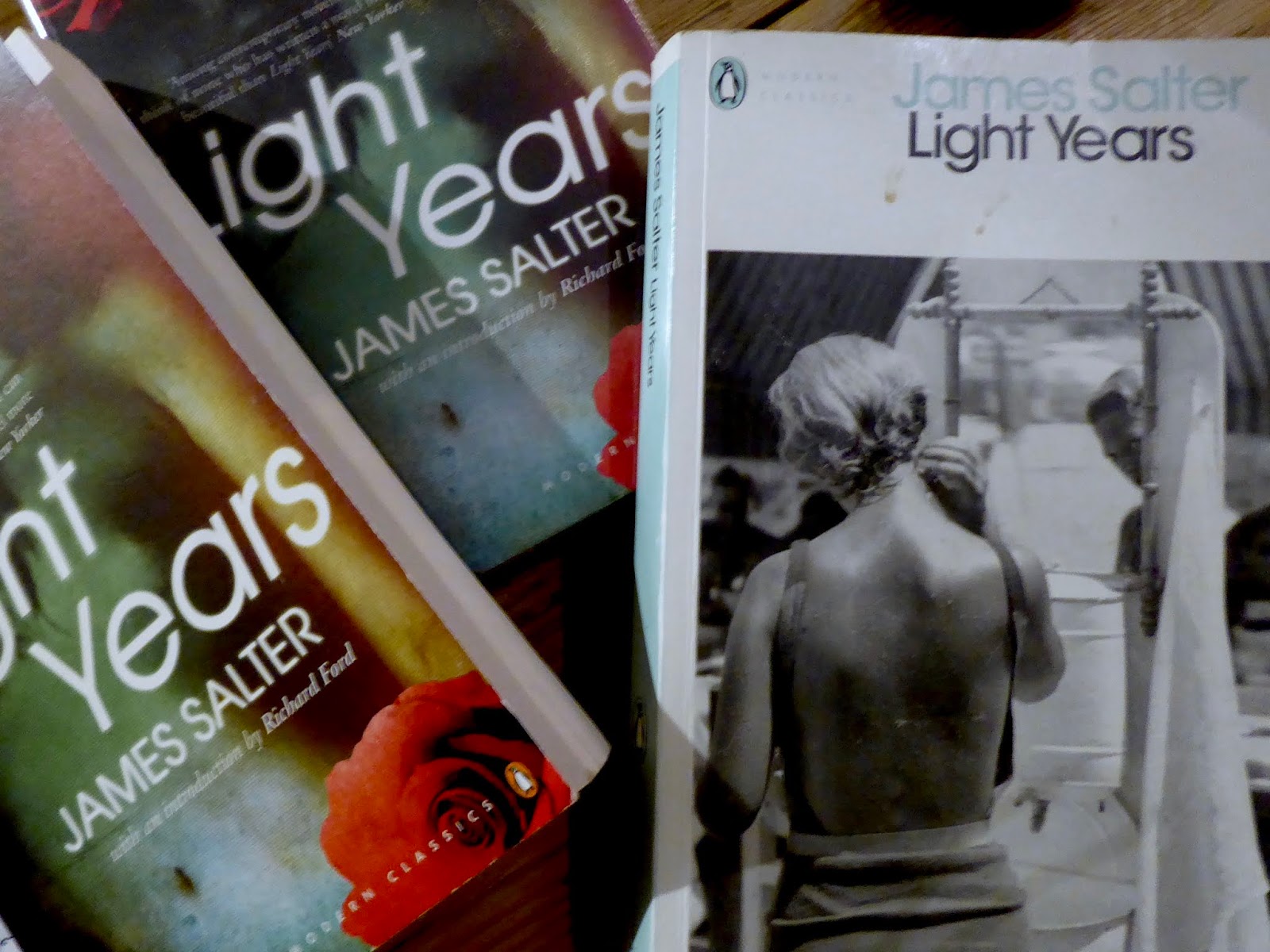
Light Years (1975) by James Salter


On Thursday 6 February 2020 Hove’s leading book group of gentlemen readers gathered for their monthly literary salon to discuss Roland’s Tainted Love themed selections

Reading: Light Years (1975) by James Salter

Light Years (1975) by James Salter
To varying degrees we struggled with Light Years which seemed to be more about “the beautiful writing” and less about the plot.

Light Years (1975) by James Salter is the story of a marriage between two Americans, the Berlands: Nedra (the woman) and Viri (the man). Viri was born in 1928 and Nedra a few years later. Had they had renamed themselves, or were two sets of American parents were giving their kids such unusual names in that era? Other characters have names like Franca, Jivan, Kaya, Arnauld, and Hadji (this one a dog).

Reviews were peppered with words and phrases like challenging, hard to get into, and exhausting. That said, we all found redeeming features, and all agreed things picked up in the second half of the book. 

The plot, such as it is, was slightly puzzling. Nedra and Viri live a charmed and good life, complete with two lovely daughters, a dog, and a vibrant social life, enjoying a lovely rural environment just outside New York and yet, before you know it, they’re both being unfaithful, and eventually they split up.

A preponderance of four and five star reviews on Amazon and GoodReads is testimony to this book’s appeal for many readers who are in thrall Salter’s beautiful writing. In reality his writing is often over laden with metaphors, similes, and analogies, aligned to a meandering plot.


Tristan had lovingly prepared this marvellous parody...

Tristra sat at a table in the Westbourne. As always there was something thrillingly vulgar about her. Outside, cars passed on the wet tarmac, like beasts from a mythical painting.

For the day to unfold it must in its blueness, its immensity hide the conspiracy she lived on,  hide but enclose it, invisible,  like stars in the daytime sky.

Her dog Nigri trotted past, toes clicking on the bare wood. fragrant beast, eyes dark as coffee, smiling mouth. Like all the old, he was always hungry.

Roli walked in. He had a long nose, an intelligent face.

Would you like some lager? she asked
I don't think there is any.
We drank it all?
Some time ago.

She was reading from a book, that transported her to distant realms

Oh Roli, she said. It's wonderful. 


Nick 7 / Tristan 7 / Nigel 6 / Keith 7 / Roland 7 / Robin 6

*

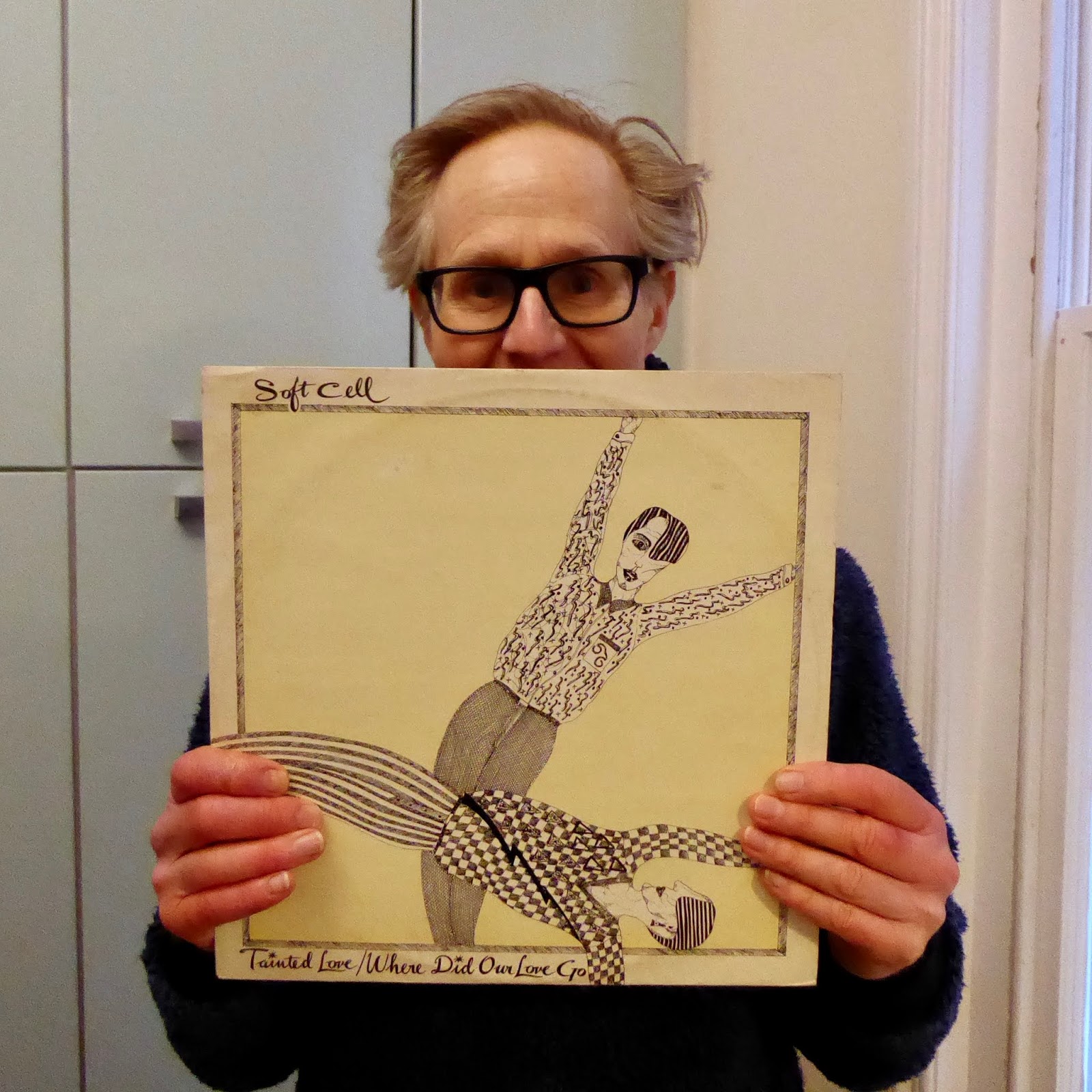
Listening: Tainted Love/Where Did Our Love Go (12 inch version) (1981) by Soft Cell


A 12 incher
We agreed that Tainted Love still sounds great. A cover version should do something new and interesting with a song and this version of Tainted Love most definitely does that. This twelve inch version which segues into Where Did Our Love Go ups the ante even more.


Shut it Nick

It’s a sublime slice of 80s synth pop.

We love it.

Nick pointed out they missed a trick by not putting one of their own compositions on the single thereby missing out on lots of royalties as this was a huge hit back in 1981. 

*
Watching: Marriage Story (2019) directed by Noah Baumbach (Netflix)

Keith was unimpressed
Most of us enjoyed this credibly handled story of a marriage break up. 

The two leads, Scarlett Johanson and Adam Driver are superb, as is the supporting cast


There was some disagreement about whether Laura Dern was any good. 

Despite being quite slow moving it was always interesting and there were some really powerful scenes. 

However Keith was left unimpressed and did not like it at all: too American and too unsubtle. He wouldn't even acknowledge Laura Dern's performance would be a worthy best supporting winner. Only time will tell whether the Academy recognises her performance at the 2020 Oscars (edit: they did).

Take that Driver. And you Johanson. 

*

Endorse It

1917 (Film/Cinema)
Peter Gabriel’s third LP (Music)
Uncut Gems (Film on Netflix)
Chernobyl: History of a Tragedy by Serhii Plokhy (Book)
Peter Gabriel - Third LP (Music)
Only You (Film on Netflix)
A Kind of Loving (Book)
A Kind of Loving (Film/DVD)
Phantom Thread (Film on Netflix)
Stewart Copeland’s Adventures in Music (BBC iPlayer)
Inside No. 9 (BBC iPlayer)

*

Next time out…

Reading: Cal (1983) by Bernard MacLaverty
Listening: Astral Weeks (1968) by Van Morrison
Watching: Good Vibrations (2013) directed by Lisa Barros D'Sa and Glenn Leyburn

Tuesday, 18 July 2017

“Goodfellas” aka “Wise Guy” (1986) by Nicholas Pileggi


Nick went with a GoodFellas theme - v much a compare and contrast deal, so much so that we took the unprecedented decision to discuss the lot together....


BOOK: “Goodfellas” aka “Wise Guy” (1986) by Nicholas Pileggi
MUSIC: “Goodfellas” Soundtrack (1990) by Various Artists
FILM: “Goodfellas” (1990) directed by Martin Scorsese

We loved the film, though some misguided types made unflattering comparisons with the Godfather despite both being works of art

Scorsese must have been jumping around with excitement as he read “Wise Guy” (1986) by Nicholas Pileggi - imagining how to film some of the key scenes

We were very struck by how much in the film is lifted from the book including whole chunks of dialogue

Also how incidental lines of dialogue are made into brilliant scene. Nick had a host of examples of this...

e.g. the date with Karen at the Copacabana / or coked up Helicopter scenes soundtracked by The Stones / or Layla soundtracking the bodies piling up after the Lufthansa heist

The last two illustrating the brilliant, chronologically arranged musical selections

So, was the book worth reading?

Absolutely however more for interest than because it stands up on its own merits. Without the film it would be a good insight into mob life. With the film it is interesting at the source material, that said there is more info on Lufthansa and more info on the Federal Witness Protection programme

We were interested to discover the legendary “Am I some kind of clown, do I amuse you…” scene is not in the book and, apparently, was improvised by Joe Pesci who had seen a real mobster do something similar.

GoodFellas' is an amazing tale, and a wonderful evocation of a bygone era but is one of those rare occasions where the film is all you really need.

All that said, Henry and his pals are amoral scumbags, and Hill is a sociopath whose justification for his crimes is that his needs outweigh everyone else's, and he dismisses anyone who is hardworking, honest or trusting as weak and just asking to be ripped off. 

Still, his outlaw mentality made for a a good book, and a classic film.

Songs on the soundtrack CD:


• "Rags to Riches" – Tony Bennett
• "Sincerely" – The Moonglows
• "Speedo" – The Cadillacs
• "Stardust" – Billy Ward and His Dominoes
• "Look in My Eyes" – The Chantels
• "Life Is but a Dream" – The Harptones
• "Remember (Walking in the Sand)" – The Shangri-Las
• "Baby, I Love You" – Aretha Franklin
• "Beyond the Sea" – Bobby Darin
• "Sunshine of Your Love" – Cream
• "Mannish Boy" – Muddy Waters
• "Layla (Piano Exit)" – Derek and the Dominos

ENDORSE IT


Currently we are endorsing…

BOOK: Watling Street by John Higgs
TV: Fargo - Season Three (C4)
TV: Gypsy (Netflix)
Music: London Grammar - Truth is a beautiful thing (2017)
Music: Turin Breaks (Live)
Film: Get Out dir by Jordan Peele (2017)
Book: Anthony Beevor - The Second World War
Film: Baby Driver dir by Edgar Wright (2017)
Music: Slowdive - Slowdive (2017)

Sunday, 7 May 2017

“Golden Hill” (2016) by Frances Spufford

On Thursday 4th May 2017 HBG travelled to everybody’s favourite city - NYC, and not only that we leapt into Doc Brown’s DeLorean and did us some time travelling because our theme was….

Three Centuries in New York City

We started in 1746, when New York was a small town on the tip of Manhattan Island. We then travelled to 1972 where and took a walk on the wild side in the company of one of twentieth century New York’s most notable artists, Lou Reed, who evokes Andy Warhol's Factory and a rich array of vignettes from Manhattan and beyond. We then got back to 1846 and the slum neighbourhood of the Five Points district where a territorial war comes to a head between two gangs. There was blood.

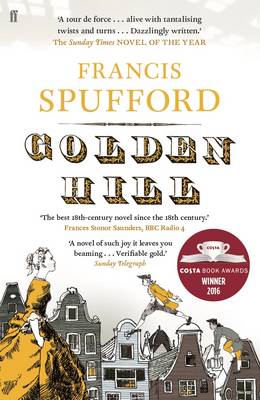
BOOK: “Golden Hill” (2016) by Frances Spufford

Golden Hill is both a novel about the 18th century, and itself a book cranked back to the novel's 18th century beginnings, when anything could happen on the page, and usually did, and a hero was not a hero unless he ran the frequent risk of being hanged.

This is Fielding's Tom Jones recast on Broadway - when Broadway was a tree-lined avenue two hundreds yards long, with a fort at one end flying the Union Jack and a common at the other, grazed by cows. Rich in language and historical perception, yet compulsively readable, Golden Hill has a plot that twists every chapter, and a puzzle at its heart that won't let go till the last paragraph of the last page.

There reaction was universal acclaim from HBG just varying degrees of enthusiasm.

* Except from Robin. Oh Robin. Why Robin why? Robin read a different book instead. Not for the first time. 

The plot lurches from one engrossing set piece to another and has, at its heart, an intriguing mystery that is not revealed until the very end.

Memorable characters, and the evocation of both the era, and the sense of the nascent New York City, are testimony to Francis Spufford's rigorous research and skills as a writer.

In short, it’s a complete delight.

Nigel 9/10
Roland 8/10
Keith 8/10
Nick 9/10
Tristan 9/10
Hamish 7/10

Robin ??? *


MUSIC: “Transformer” (1972) by Lou Reed 

In 1997, Transformer was named the 44th greatest album of all time in a Music of the Millennium poll conducted in the United Kingdom by HMV Group, Channel 4, The Guardian and Classic FM. Transformer is also ranked number 55 on NME 's list of "Greatest Albums of All Time." In 2003, the album was ranked number 194 on Rolling Stone magazine's list of the 500 greatest albums of all time. It is also on Q Magazine's list of "100 Greatest Albums Ever”.

Yet more love for Lou’s Transformer, thou Hamish was a tad disappointed

FILM: “Gangs of New York” (2002) directed by Martin Scorsese

Gangs of New York is a 2002 American epic period drama film directed by
Martin Scorsese, set in the mid-19th century in the Five Points district of New York City. The screenplay is by Jay Cocks, Steven Zaillian, and Kenneth Lonergan. It was inspired by Herbert Asbury's 1927 nonfiction book, The Gangs of New York. It was made in Cinecittà, Rome, distributed by Miramax Films and nominated for numerous awards, including the Academy Award for Best Picture, among nine other Oscar nominations.

GONY was a bit more divisive but most of us found it a big fat slice of entertainment

ENDORSE IT

Currently we are endorsing...

FOOTBALL: Brighton and Hove Albion FC promotion to the Premier League
FOOTBALL: Portsmouth FC promotion to League One
BOOK: Rodigan: My Life In Reggae by David Rodigan
PODCAST: S-Town (podcast from the makers of Serial and This American Life) - second month running
TELEVISION: Line of Duty
TELEVISION: Easy on Netflix
TELEVISION: This Country on iPlayer
BOOK: The Goldfinch by Donna Tartt 
TELEVISION: Car Share on iPlayer
BOOK: One Hundred Years of Solitude by Gabriel Garcia Marquez
TELEVISION: Young Offender on Netflix

Friday, 7 October 2016

“London and the South-East” (2009) by David Szalay


Hove's finest book group were reunited (and it felt so good) on Thursday 6th October 2016 to discuss Nigel's Sales and Selling themed selections.  Here's another highly unreliable and blinkered view of what went down.

“London and the South-East” (2009) by David Szalay

London and the South-East’ is a melancholic, downbeat novel but one that completely gripped most of us.  Hamish was the one dissenting voice who described it as "a stinker".  

Unlike most novels, work is at the core of this book, and - in this instance - initially at least, it’s the dispiriting world of magazine advertising sales. This is a painfully forensic examination of the horror of the modern workplace and the work "relationships of convenience" that flow from it. Middle-aged Paul Rainey, the borderline-alcoholic protagonist, works for one of those free business magazines that arrive in the post and which no one reads. David Szalay has really nailed the minutiae of the workplace and, in particular, the world of selling. However sales is just the springboard for an unpredictable and original plot that was both realistic and credible, but also frequently very surprising. 

London and the South-East’ is one of the most relatable books we’ve ever read. This sense of realism was further enhanced by our familiarity with many of the Brighton and Hove streets and venues that appear in the book. Most impressively, these places were described with complete accuracy, and this attention to detail informs the entire book. 

London and the South-East’ is a painful exploration of how both work and home form the basis of our identity and our happiness, such as it is, and it’s an unflinching look at commuting, selling, family, identity and compromise. It is bleak, dark, and quite brilliant.

Nigel 9/10 / Tristan 9/10 / Robin 8.5/10 / Hamish 3/10 / Nick 7/10 

MUSIC: “The Who Sell Out” (1967) by The Who 

Nigel expressed joy at the selling theme and especially a link between the film and the music. The film highlights a world that the Beatles and the "British Invasion" of the mid 60s, including The Who, would help to smash with a sledgehammer - but more of that in the film section.

1967 was a year of some remarkable album releases… The Doors debut, Jimi Hendrix debut, Pink Floyd debut, The Velvet Underground and Nico, Love ‘Forever Changes’, Scott by Scott Walker, ‘Something Else’ by The Kinks, and - of course - “The Who Sell Out” (1967) by The Who 

The mid sixties was an era of massive change which this album ably captures.  Consider…

Beatles for Sale (1964)
Help! (1965)
Rubber Soul (1965)
Revolver (1966)
Sgt. Pepper's Lonely Hearts Club Band (1967)

Or

My Generation (1965)
A Quick One (1966)
The Who Sell Out (1967)

Could you imagine such seismic cultural and musical changes in such a short space of time in the modern era?

Despite 1967 seeing the birth of BBC Radio 1, in response to the pirates, commercial radio would still have seemed very new and modern back in 1967 and The Who’s radio ads are a brilliant idea.  Indeed there were no official commercial radio stations in the UK until the early 70s.  Apparently The Who tried to charge the relevant organisations - to no avail.

Any album that contains ‘I Can See For Miles’ is automatically a contender for classic status but, as we discovered it’s also full of other wall-to-wall psych-pop classics.  

The Who Sell Out was the third studio album by The Who and purports to be a broadcast by pirate radio station Radio London. Part of the intended irony of the title was that The Who were making commercials during that period of their career, some of which are included as bonus tracks on the remastered CD.

“Tin Men” (1987) written and directed by Barry Levinson

Tin Men is a 1987 American comedy film written and directed by Barry Levinson.  Tin Men is the second of Levinson's four "Baltimore Films" set in his hometown during the 1940s, 1950s, and 1960s: Diner (1982), Tin Men (1987), Avalon (1990), and Liberty Heights (1999).  It is 1963. Ernest Tilley (Danny DeVito) and Bill "BB" Babowsky (Richard Dreyfuss) are door-to-door aluminum siding salesmen in Baltimore, Maryland. Working for different companies, the "tin men" are prepared to do almost anything—legal or illegal—to close a sale.

An old favourite - man, what a great film - Nigel was a bit worried it wouldn’t be quite so good after a good 15 years since his last viewing.  He needn’t have worried…

Levinson also responsible for Homicide Life On The Streets (by David “The Wire” Simon) - a precursor to so much else - so you can imagine we were somewhat in awe.  


What's good about it?...

Fine Young Cannibals
The Diner
The dynamic between the men
The selling - the scams (life magazine, mental breakdown) - the humour - the period details.  
The highly defined roles of men and women
Men (suits, selling, fighting…) Women (cold calling, typing pool, housewives being sold to..)
The leads - Devito, Dreyfus and Hersh.  What a trio.  All brilliant.
The fight in the parking lock
The commission - is that supposed to echo the Macarthy's House Un-American Activities Committee?

“Tin Men” is one of those movies that has sympathy for all of its characters

Tilley is cantankerous to the point of self-destruction, while BB is a flamboyant ladies’ man who has neglected his inner life. They behave dreadfully during their feud: Bill pretends to be a widower and lies about his occupation to seduce Nora, while Ernest hits Bill over the head and pelts him with mouldy tomatoes and eggs, prompting a hilarious police report.

The Baltimore alleys that would come to feel like very scary places in David Simon’s “The Wire” are already shabby in “Tin Men”

BB to Tilley “You know what our big crime is?  We’re nickle- and-dime guys. Just small-time hustlers that got caught because we were hustling nickles and dimes.” 

It made us feel very nostalgic for a time and a place that we have absolutely no personal experience for and THAT is the sign of a brilliant film.

Endorse it

Here's what we're endorsing at the moment...

Tristan: Stranger Things (Netfilx TV series)
Tristan: Fleabag (BBC TV series on iPlayer)
Nick: Brian Wilson
Robin: Sapiens: A Brief History of Humankind by Yuval Noah Harari (Book)
Hamish: The President's Hat by Antoine Laurain (Book)
NIGEL: The Get Down (Baz Luhrman 2016) (TV - Netflix)
NIGEL: The Get Down (OST 2016) (Music)
NIGEL: All That Man Is by David Szalay (2016) - Book
NIGEL: The Age of Bowie by Paul Morley (2016) - Book

Friday, 27 May 2016

“Djibouti” (2010) by Elmore Leonard


On Thursday 26th May 2016 we were found waxing lyrical about Keith’s criminal choices...

BOOK: “Djibouti” (2010) by Elmore Leonard

Keith was after fun.  F.U.N.  A middle eastern western if you will.  A bit of prime time Leonard.  Aside from a moan about the missing words - lots of missing words - he was satisfied.  Fun was what he wanted and fun was what he got.

Hamish was less enthralled.  All of us were Leonard first timers and, like Hamish, we all found it a confusing book with an off putting style.  

Nigel was excited about reading Elmore Leonard because he likes crime writing and the best of the genre (e.g. Chandler, Mankel, Rankin). Nigel was expecting to be in LA and not in the northeastern corner of Africa mixed up in a shaggy dog story about Somali pirates and Al Qaeda. Unlikely characters abound in this book.  Open this book at almost any page and you will encounter nonsensical, faux hard boiled exchanges. Nigel could only conclude this latter day Leonard must be an enormous big old anomaly.  


Robin was angry.  This book had made him angry.  Had Elmore got dementia? 

Tristan railed against the missing words.  Utterly ridiculous.  Only a dose of Robert B Parker will exorcise the memories of this book.

Nick had read Rum Punch and Get Shorty and enjoyed them both. The attention to the sleazy underbelly is excellent, the characters are well drawn and the powerful figure of Jackie Brown is the template for Tarantino’s greatest movie.  In Djibouti Elmore gets it all wrong - it is a book phoned in. The characters are hackneyed - the Al Qaeda fighters and Somalian pirates are one dimensional, the female characters are sexist (even though he seems to try and paint them as the opposite), the horny, older black man, the Texan cowboy. Jesus, where do I stop…please make it stop  And . . nobody, ever "ran” with the Sloane Rangers.  Very occasionally you get glimpses of the clipped dialogue that made the other books so engaging, but that’s when he stays on the ground he is more in tune with. 

Keith 7/10
Tristan 3/10
Hamish 4/10
Nigel 2/10
Nick 2/10
Robin 1/10

MUSIC: Keith H presents “A Criminal Playlist” 

Everyone found something to enjoy in Keith's criminal playlist.  Fun Lovin' Criminals (Nigel, Tristan, Nick), Dutch Criminal Record (Robin), Junior Smalls and the Criminals (Hamish), and Criminal Hygiene (Keith).


FILM: “Kiss Kiss Bang Bang” (2005) directed by Shane Black

“Kiss Kiss Bang Bang” was everything that we had hoped the book would be.  Sassy, urban, cool, with great characters.  It really was great fun, whilst the plot bears very little scrutiny, the dialogue is great and the characters are brilliant.  

We loved the “Gay Perry” character and, weirdly, it was his bromance with the always watchable Robert Downey Jr. that made the film.  The “real” romance with his childhood sweetheart paled into insignificance in comparison.  

Our only criticism is that lack of thrills.  It’s played so much for laughs that there is zilcho dramatic tension but as a witty, postmodern comedy it’s blimmin great.


ENDORSE IT:

What we’re currently endorsing...

HAMISH: Imarhan - Imarhan (Music)
HAMISH: The Goon Sax - Up To Anything (Music)
NIGEL: Bowraville (5 X Podcast from The Australian newspaper) LINK AS PROMISED
NIGEL: The Wolf of Wall Street (Film)
ROBIN: Escape from ISIS (Film)
ROBIN: Peaky Blinders (TV series)
ROBIN: Lianne La Havas (Music)
ROBIN: Hannah Brackenbury (Comedy)
ROBIN: Blossoms - Charlemagne (Song)
KEITH: AA Milne - The Red House Mystery (Book)
KEITH: John Franklin Bardin - The Deadly Percheron (Book)
TRISTAN: Naomi Klein - This Changes Everything (Book)
TRISTAN: Flowers (TV series)
TRISTAN: Ann Leckie - Ancillary Justice (Book)


Sunday, 24 April 2016

“Seven Terrors” (2012) by Selvedin Avdić


BOOK: “Seven Terrors” (2012) by Selvedin Avdić

Thanks Selvedin Avdić.  You were the catalyst for a superb discussion at The Westbourne. Our first meeting there following the new found popularity of The Poets Corner - or the Poets Ale and Smoke House as it is now known.  Whilst we mourned the passing of Prince, we enjoyed having the public bar to ourselves, as we supped ale, rapped about Tristan's East European selections and grooved to the eclectic musical playlist that seemed to be made just for us.

Tristan, who chose the book, ruefully observed that sometimes the only way to write about something horrible is to do it obliquely. In Seven Terrors we see the Bosnian war of the early to mid-90s glimpsed fleetingly, out of the corner of the eye, like a ghost passing between two worlds. Tristan choose that metaphor carefully, because this is a book in which two worlds are often in contrast, if not in conflict: the living and the dead, the time before a woman leaves a man and after, the pre- and postwar world, the spirit and human worlds, madness and sanity, dreaming and reality, Muslim and Christian, Muslim and atheist. A bar owner, about to thump the drunken and abusive narrator, and relishing the moment, "was shining like a comet separating two epochs". There is even, mundanely, the difference between the way a radio station operated before digital technology, and afterwards. This recurring motif of division and separation, though, is not laboured; it's woven into the book's structure, but Tristan wondered whether it was even intentional. 8/10

Nick felt that Selvedin Avdić was on to something, and not just by way of a metaphor describing a divided country. It's darker than that, with something of the nature of folk story thrown in, too. Seven Terrors is a story that starts off weird and gets weirder, but with the logic and clamminess of a bad dream. It's quite unlike anything Nick had read before, but it has all the consistency and force of something major and assured. That it has room for humour is testament to Avdić's confidence.  7/10

Nigel loved this unexpected gem that he knows will stay with him.  An allegorical tale which, whilst ostensibly about a lonely man who has withdrawn from the world and then is forced to reemerge, also confronts the aftermath of the Bosnian war of the 1990s. The fragility of the nameless narrator, as he tries to find an old friend who has disappeared, echoes the fractured post-war world he inhabits. This beguiling 150 page novel packs so much in and, despite dealing with serious matters, is highly readable, and sporadically funny, as it juxtaposes a heady mix of war, myth, popular culture, and the supernatural. It’s profound and very clever. There are layers of subtext and plenty to ponder by the end, not least, at the back of the book where there are further notes and reflections. 8/10

Robin felt a kinship with the unnamed narrator, a former radio journalist, pulling himself out of a nine-month torpor following the departure of his wife. Did his extreme condition owe something to Beckett?  Robin fell in love with Mirna, the daughter of an old friend and colleague, Aleksa, who vanished in 1993. Robin also loved Perkman who signifies either hidden treasure or a forthcoming disaster. Aleksa has to find out if he's going mad – to see whether or not anyone believes him. Soon the miners start to shun him; at first, he thinks it's because he's a Serb; but now he's seen the djinn, it seems they think he's bad luck. We are all, a bit Perkman?  Yes?  Yes yes, yes indeed, most emphatically, smiled Robin, enigmatically, before suggestively sipping his Benchmark ale.  7/10

Keith, gazed at us grim faced.  Not good.  Not good at all.  Yes, so it was a book which managed to weave the mythic horror familiar from legend and modern masters of the fantastic like Bulgakov and Leo Perutz with the horrors of the Balkan war and human cruelty. And, Keith could also dig the idea of an old friend who seems to have disappeared into the mythical underworld.  We’ve all needed something to get us out of bed after nine months of bemoaning a wife’s departure. But c’mon, a kind of underworld and two of the most deftly drawn villains of contemporary fiction, the Pegasus brothers?  Lovers of death from childhood and ghostly white from head to toe?  Do we need this just to understand the way man can become a monster and then man again?  Not me, sobbed Keith. 5/10


Hamish highlighted the unsettling nightmare of post-war Bosnia but was left confounded by this work of Gothic genius. The choice to sublimate the actualities of mass burials, and focus on paranormal activity and returning spirits, whilst our hapless protagonist tried to bring love and meaning back into his life, was eerily familiar. 7/10


MUSIC: “Give” (2011) by Balkan Beat Box

Tristan 5/10
Hamish 5/10
Robin, he no listen to no stinking Balkan Beat Box
Nick, a load of Balkans
Nigel, bit of Congo Natty, Gogol Bordello & Major Lazer

Must try harder seemed to be the consensus


FILM: “No Man's Land (Bosnian: Ničija zemlja)” (2001) directed by Danis Tanović

Everybody loved this 2001 war film that is set in the midst of the Bosnian war. The film is a parable and marked the debut of Bosnian writer and director Danis Tanović. It is a co-production among companies in Bosnia-Herzegovina, Slovenia, Italy, France, Belgium and the UK. The film won the Oscar for Best Foreign Language Film in 2001.

ENDORSE IT

Here's what we're currently endorsing...

Tristan: Whitechapel (TV series)
Hamish: Perdido Street Station by China Miéville
Keith: Nottingham's Galleries of Justice
Robin The Durrells (TV series)
Nick Julia Davis' Camping (TV series)
Nigel:
People vs OJ Simpson (TV series)
Breakdown podcast - Justin Ross Harris case
The Limiñanas “Malamore" LP
“Jumpin’ Jack Flash: David Litvinoff and the Rock'n'Roll Underworld” by Keiron Pim

And on that note we bade each other farewell and rode off into the night.

Adios amigos.  Hasta la vista


Monday, 14 March 2016

“Remains of the Day” (1989) by Kazuo Ishiguro

“Remains of the Day” (1989) by Kazuo Ishiguro


The Remains of the Day (1989) is Kazuo Ishiguro's third published novel. The work was awarded the Man Booker Prize for Fiction in 1989. A film adaptation of the novel, made in 1993 and starring Anthony Hopkins and Emma Thompson, was nominated for eight Academy Awards.

Nick, who chose this tome, thought it was wonderful and, to varying degrees, so did the rest of the group

It was like slipping into a warm bath - something at once very familiar but completely welcome. 

The Remains of the Day is about many things, but first and foremost it is about regret. Stevens the Butler, who narrates the tale, is obsessed with a sense of duty and commitment, and thus puts his complete trust, and all his professional energies, into serving Lord Darlington, a decent if gullible British aristocrat who, despite honourable intentions, is ultimately labelled a Nazi sympathiser.

Stevens’ professionalism and perfectionism result in him belatedly realising, in his autumn years, that he has missed the chance of a fulfilling and loving relationship with a woman who loved him. Stevens’ extreme formality and obsessive sense of duty ultimately made him incapable of intimacy, empathy and emotional attachments. 

The story is cleverly told through a series of atmospheric and powerful reminiscences whilst, back in the present day, Stevens makes a rare journey away from Darlington Hall, where he has spent the majority of his life. The Remains of the Day perfectly evokes the life of a butler in a Great English House between the wars whilst, simultaneously, revealing Stevens’ recognition of, and regret about, some of his decisions and behaviour. Every page is an absolute delight. A subtle, clever, powerful, beautifully written novel.

Hamish was the only slight naysayer... describing the book as a curious read.  On the one hand, Ishiguro’s writing is immaculate.  Beautifully worded, precise, and very very clever.  His characterisations are utterly believable and in real depth.  Despite learning next to nothing about Stevens’ personal life, he is a very finely drawn character.  As are Miss Kenton and Lord Darlington too.

However Hamish likes a bit of a story.  And there wasn’t really much of a story.  In that sense he found it a little unsatisfying.  It reflected the low pace of English upper class life perhaps.  He did enjoy Stevens’ reflections on what make a great butler and the German/French conference at Darlington Hall was a highlight. But little happened other than a car running out of petrol.

His other criticism was the almost perverse way that Stevens appeared incapable of recognising Miss Kenton’s feelings.  Stiff upper lip is one thing, but that all seemed a bit excessive. 

So he was not really sure what he took from the book at the end.  Yes, it commented on the state of the English upper classes and political changes between the wars, but he might have preferred a non-fiction account of that. 

Overall, a decent and very artistic read.  Not sure quite why it won the Booker though 

Nick - 10/10
Keith - 8/10
Tristan - 9/10
Robin 10/10
Nigel - 9/10
Hamish - 7.5/10

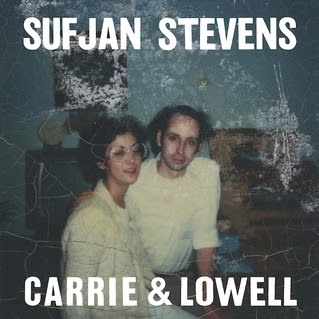
MUSIC: “Carrie & Lowell” (2015) by Sufjan Stevens

Carrie & Lowell is the seventh studio album by American musician Sufjan Stevens, released through Asthmatic Kitty on March 31, 2015. Unlike Stevens's previous studio album, the electronic The Age of Adz,Carrie & Lowell is sparsely instrumental and marked a return to the performer's indie folk roots.

There was a mixed reaction to Surfjan's sounds - some loved the heartfelt emotion and soul baring others thought it was no One Direction and he needs to cheer up a bit

Hamish hadn’t really got Mr Stevens until this album, but he enjoyed this album immensely.  He saw him play at End of the Road last year, where he was a revelation.  He was supported by a full and fairly loud band.  I wasn’t quite sure how the songs on Carrie and Lowell would fare but they were quite brilliant.  In some ways the album sounded very different with so much backing, but it also made the whole thing far more intense.  Hamish recommends seeing him live if you get the chance.  And Carrie and Lowell is a hit.


FILM: “Punch-Drunk Love” (2002) directed by Paul Thomas Anderson

Punch-Drunk Love is a 2002 romantic comedy-drama film written and directed by Paul Thomas Anderson and starring Adam Sandler, Emily Watson, Philip Seymour Hoffman, Luis Guzmán, and Mary Lynn Rajskub.

In "Punch-Drunk Love," Sandler plays Barry Egan, an executive in a company with a product line of novelty toiletries. Barry has seven sisters, who are all on his case at every moment, and he desperately wishes they would stop invading his privacy, ordering him around and putting him down. He tries at a family gathering to be congenial and friendly, but we can see the tension in his smiling lips and darting eyes, and suddenly he explodes, kicking out the glass patio doors.

"Punch-Drunk Love" is above all a portrait of a personality type. Barry Egan has been damaged, perhaps beyond repair, by what he sees as the depredations of his domineering sisters. It drives him crazy when people nose into his business. He cannot stand to be trifled with. His world is entered by alarming omens and situations that baffle him. The character is vividly seen and the film sympathizes with him in his extremity.

Friday, 12 February 2016

"My Revolutions" (2007) by Hari Kunzru


"My Revolutions" (2007) by Hari Kunzru 

Nigel explained how his "nu-lad" theme (see June 2015 discussion) was a goodie but the associated choices (Keith Nixon - The Fix/Iggy/A Prophet) were let down by the book and he wanted to put that right, whilst still retaining a coherent overarching theme that effectively linked the choices together

Various other excellent books had led to Nigel's book choice for this month...


  • Jake Arnott - Johnny Come Home
  • Stuart Christie - Granny Made me an Anarchist
  • Francis Wheen book - Strange Days Indeed: The Golden Age of Paranoia

So, this era has inspired some great writing, but how would "My Revolutions" fare...?

Nigel primarily hoped to evoke the era, including the paranoia, revolutionary fervour etc - a time when some people really cared about radical politics, and the possibility of a socialist world felt more tangible

Also, by happy coincidence, this was a good follow on from "The Bottle Factory Outing" (see last month) as we were in a similar era

Nigel liked the different concurrent plot lines, which cleverly intertwine various aspects of Mike/Chris life and which primarily focus on his quiet, present day life as a middle class house husband in Chichester, and his former life as an ex-student who drifts into a hardline revolutionary group in the late 1960s and early 1970s. Other plot lines include Chris’s childhood, a few years recovering from addiction in Thailand, and a few more - all are absorbing. 

The present day story gradually comes more and more to the fore and this is what drives the slow burn narrative. Nigel was captivated by both primary plot lines, but especially the descriptions of squats, political meetings in various London locations and beyond, demonstrations, bombings, safe houses, encounter groups, festivals, discussions etc. Mike finally realises the dreams of liberation he'd fought for were illusory, and impossible.

The novel’s elegiac tone perfectly celebrates the era of armed revolutionary struggle, whilst also exploring the madness of extremism, personal identity, relationships, radical politics, violence, gender politics, family, and today’s political landscape. It’s an incredible achievement, brilliantly written and, if you have any interest in the revolutionary armed struggle of the 1970s, you will find much to enjoy.

Cleverly Kunru convinces us that (like all gang members?) Mike/Chris is looking for a new family or somewhere to fit in and thus is very suggestive e.g. Anna at the party encouraging him to call guests pigs, or the transgressive sex.  Mike is always, right until the very end, working to someone else’s agenda - even as a househusband in his modern incarnation - and even more so with Miles using him for his own ends.

Where this book really scores - and what Nigel was hoping for - was in its credible evocation of the era and the revolutionary milieu

The elegiac tone encapsulated by this aside from Miles to Chris when discussing radical politics…

"You were irrelevant, don't you get that? History doesn't care about what you did. Who's even heard of you? Ideology is dead now. Everyone pretty much agrees on how to run things” 

Tristan was very enthusiastic about this book lavishing it with fulsome praise.

Keith raced through the book but struggled to retain much about it

Nick would have enjoyed it much more if he had read it 15 years ago when he lapped up books about the 1970s.  

Hamish loved the revolutionary theme but felt the book was the least good selection of the three choices we discussed.

Scores on the doors...

Nigel 8/10
Tristan 9/10
Keith 8/10
Nick 6/10
Hamish 7/10

MUSIC: Hazy Cosmic Jive presents "Something in the Air”

"Because the revolution's here, and you know it's right…"
This mix aims for an early 70s, mournful, melancholy, wistful, post-hippy comedown vibe.  I’m hoping you’ll be able to smell the unmistakeable tang of a wet Afghan goat, partially masked by patchouli and joss sticks, whilst a news bulletin reports the latest activity of urban guerilla’s The Angry Brigade.  


Tracklist:

Thunderclap Newman - Something In The Air

Brian Protheroe - Pinball 

Faces - Glad and Sorry 

David Bowie - Eight Line Poem 

Bread - The Guitar Man 

Roxy Music - Chance Meeting 

America - A Horse With No Name 

The Rolling Stones - Coming Down Again 

Elton John - Goodbye Yellow Brick Road 

Faces - Debris 

Lesley Duncan - Everything Changes 

Cat Stevens - Where Do The Children Play? 

Jonathan Kelly - Madelaine 

The Rolling Stones - Wild Horses 

Mott The Hoople - All The Young Dudes 

David Bowie - Quicksand 

Faces - If I’m On The Late Side 

Slade - Everyday 


Nigel explained he was hoping to create a movie type soundtrack to a book he hadn’t read. If he was doing it again, having read the book, he would have thrown in a few more 60s tracks - didn’t realise so much was in the 60s - however he still felt it worked well with its post-hippy comedown vibe.  Key track is  - Thunderclap Newman - Something In The Air - though it is all fukkin ace.  Obvs.

Fortunately everyone was of the same mind: a great musical accompaniment to the book

FILM: One Day In September (1999) directed by Kevin Macdonald

Nigel was looking for a coherent choice to complement the book and the music.

The consensus was that this documentary was a direct hit.  A balanced film that brought home the tragedy and the politics.  The mix of footage from the olympics and more recent interviews was great.  Michael Douglas narration worked well and the music was very effective.  The gross incompetence of the Germans has to be seen to be believed.  Perhaps understandable given their desire to reinvent themselves after Nazism, plusthis was a relatively early example of this type of terrorism.

ENDORSE IT

Tristan: Wild Tales (Argentinian film)
Keith: The Rat Pack (iPlayer)
Nick: What we do in the Shadows (film - on Netflix)
Hamish: Perdido Street Station - novel by China Miéville 
Nigel: Creed (film directed by Ryan Coogler) -  spin-off and sequel to the Rocky series